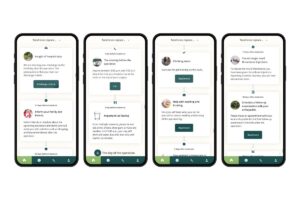
Various hospitals and clinics use the Orthopaedic Intake module. The goal of this module is to optimally prepare patients before their appointment at the hospital. This includes the use of an intelligent questionnaire that asks the right questions based on the affected joint. Additionally, the questionnaire maps out the patient’s care needs or requirements.
Orthopaedic Intake
Healthcare providers often spend a lot of time asking standard questions at the beginning of a consultation. These questions relate to the complaint, its onset, symptoms, and the impact on daily life, work, and sports or hobbies. While these questions are crucial, asking them takes a significant amount of time and they are questions patients can reflect on at home. The Orthopaedic Intake module addresses this by handling these standard questions in advance. Additionally, the module focuses on the patient’s care needs: what does the patient expect from the consultation with the healthcare provider?
Feedback through the EPR
The results of the questionnaire are automatically processed into a summary that is visible in the Electronic Patient Record (EPR). This approach allows the consultation to focus earlier on what is truly important to the patient and which treatment is best suited to their needs.
The patient knows better what is important for the healthcare provider, and the healthcare provider knows better what is important for the patient.
Benefits for the patient and healthcare provider
For both patients and healthcare providers, the Orthopaedic Intake module contributes to a more personalised approach to care. The patient knows better what is important for the healthcare provider, and the healthcare provider knows better what is important for the patient. Additionally, the module provides an opportunity to better map patient intake: the Right Care in the Right Place, and potentially even the Right Healthcare Provider for the Right Patient. Ultimately, the use of the module also helps build a large, structured database. This database offers healthcare institutions valuable insights that can optimise the intake and flow of patients more effectively.
More information?
Curious about what this solution could mean for your field or organisation? Register for our free webinar: “From admission to recovery: Streamlining care with Patient Journey”
Patient Journey provides clarity and support for breast cancer patients at Kent Oncology Centre
The Kent Oncology Centre supports patients living with and beyond breast cancer through the Patient Journey app. Through this app, patients can access information at any time about their diagnosis, treatment and the next steps in their care pathway. It offers clarity, structure, professional credibility and reassurance at a time of considerable uncertainty.
How Patient Journey benefits patients and staff at the Vulpius Klinik in Bad Rappenau
The Vulpius Klinik in Germany introduced the Patient Journey app to improve patient information and engagement in orthopaedic care. The app digitises care pathways for knee and hip replacement procedures, guiding patients through preparation, surgery, recovery and follow‑up with clear information and videos.
Now part of the clinic’s Rapid Recovery programme, the app has strengthened patient involvement, improved communication, and supported more efficient and effective care for both patients and clinicians.
Jeroen Bosch Hospital applies Patient Journey in Preoperative Screening
The Department of Anesthesiology at Jeroen Bosch Hospital (JBZ) has implemented the Patient Journey to make Preoperative Screening (POS) more efficient. Through the Patient Journey app, patients complete a triage questionnaire and receive guidance throughout the entire process leading up to surgery.