
Nurses leading the way: how shared decision-making for stroke car became standard practice
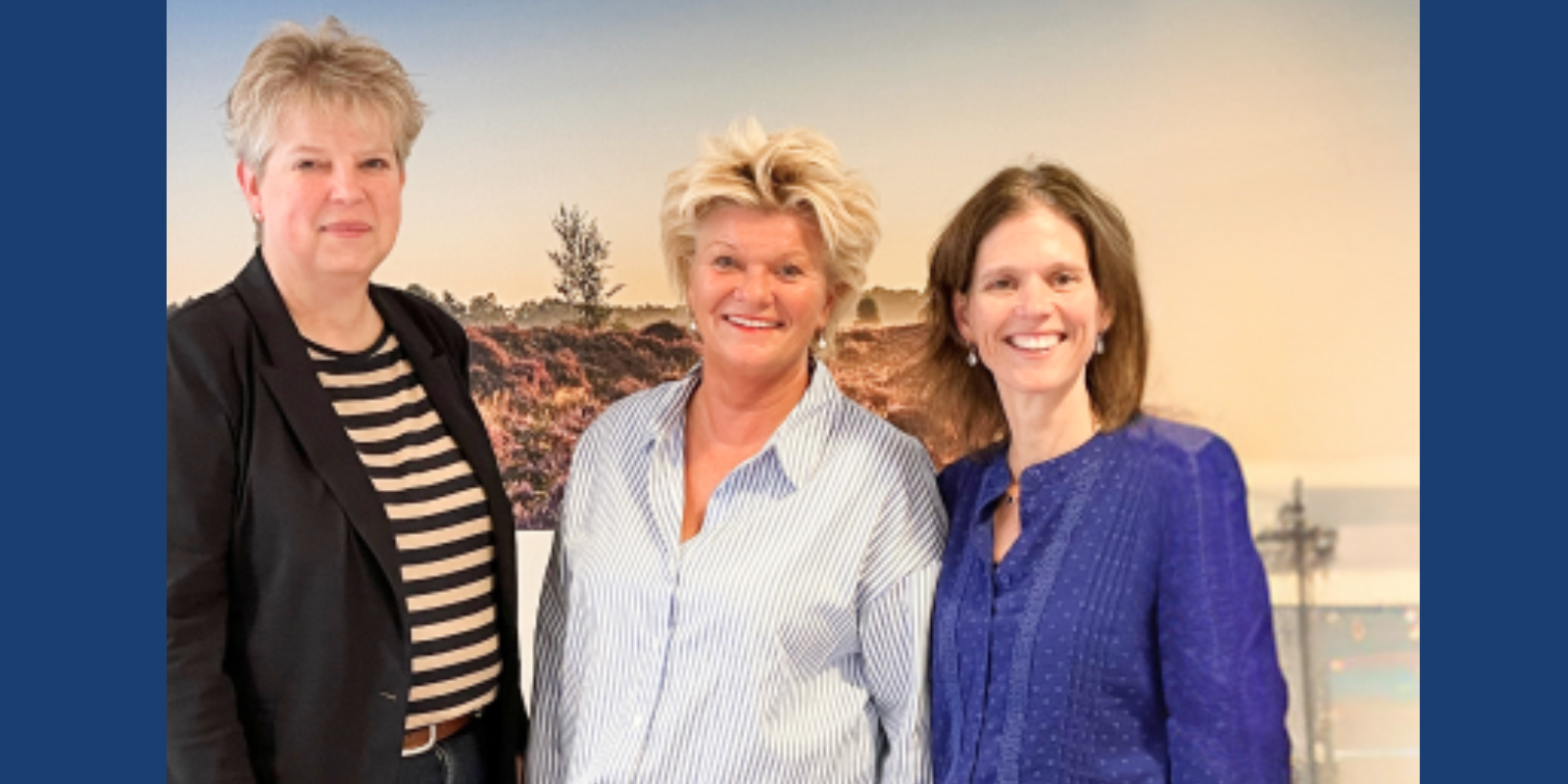
All patients with a stroke (CVA) on the Braincare ward at Wilhelmina Hospital Assen (WZA) are offered the Stroke (CVA) Decision Aid – not because it’s required, but because it really makes a difference. Nurses Harma Oving and Mannie van der Giessen, together with project lead Marieke Westendorp, have gradually built a robust, step-by-step process. ‘The Decision Aid is just part of the job now.’ How did they manage to get the whole team on board? And what are their main takeaways?
Start with a clear goal
The idea of using the Stroke (CVA) Decision Aid arose from a desire to involve patients and their families more actively in their care. ‘We felt it was important to involve patients more in choosing their discharge destination and to provide better information about the options, so their expectations are more in line with reality. We also wanted more clarity in the admission and discharge process, both for the patient and for the team. The Decision Aid helps with that,’ says Marieke.
You have to put energy into it together at the start, so you can reap the benefits later.
– Marieke Westendorp, oncology care advisor, WZA
The whole team was fully informed and actively involved in preparing the implementation. Shared decision-making and the Decision Aid were given plenty of attention during team meetings, and we discussed why we wanted to work with it and what we aimed to achieve. Everyone was given the opportunity to explore the Decision Aid themselves, and questions or concerns were discussed together. ‘You have to put energy into it together at the start, so you can reap the benefits later,’ Marieke adds.
The team began using the Decision Aid in January 2023. On admission, a nursing consultation is now routinely scheduled within 48 hours. During this consultation, the Decision Aid is explained, and patients and their relatives are invited to complete it together on the iPad. ‘We’re always nearby to answer any questions. But in our experience, around 95% of patients and relatives manage perfectly well without our help,’ says Harma.
Nursing team in the lead
Although implementing a new way of working always takes some getting used to, the nursing team took ownership from the very start. ‘The doctors are not actively involved in handing out the Decision Aid, but they fully support it. We, as nurses, are responsible for giving it to patients, following it up, and making sure the summary is uploaded in the right place in the record so it can be discussed in the MDT,’ explains Harma.
Right from the start, we said: this is simply part of our job now. Everyone knows what is expected of them.
– Mannie van der Giessen, nurse, WZA
By including the Decision Aid in the activity plan, it became part of standard care. An impressive 94% of all patients who receive the Decision Aid actually complete it. ‘Right from the start, we said: this is simply part of our job now. Everyone knows what is expected of them.’ Shared decision-making is now firmly embedded in our nursing pathway,’ says Mannie.
The power of repetition
After some time, attention to the new way of working started to fade a little and use of the Decision Aid dropped off. ‘We then brought it back into focus during team meetings and in the weekly newsletter. Colleagues were also spoken to individually if the Decision Aid wasn’t always being handed out. That way, it was back on everyone’s radar and now it’s simply part of the job,’ says Harma.
‘We also make a point of celebrating our successes. When the first 100 patients had used the Decision Aid, we had cake. We create visual quarterly reports with figures and explanations, highlighting what’s going well and what we still need to pay attention to. That makes it very tangible for everyone. The power of repetition and emphasising the positives is really motivating,’ Marieke explains.
In the past, the discharge destination was often just communicated to patients. Now, patients and their families are actively involved: what do I want, what can I manage and what do I need?
– Harma Oving, nurse, WZA
Better conversations and more engaged patients
The nurses have noticed that patients are now taking a more active role in their care pathway – they have truly become part of the process. ‘In the past, the discharge destination was often just communicated to patients. Now, patients and their families are actively involved: what do I want, what can I manage and what do I need?’ Sometimes a patient initially has a different idea about their discharge destination. After completing the Decision Aid, it often becomes clear to them that going straight home isn’t realistic and why rehabilitation is needed,’ says Harma.
According to Mannie, ‘Patients appreciate being able to think things through and feel prepared for their conversation with us. They’re better informed and more involved, and as a result, communication is also quicker.’
Because the Decision Aid is completed together with the family, it gives a clear picture of the patient’s situation and preferences. This information is available during the MDT, where the neurologist and the wider team decide on the next steps. The nurse actively brings the patient’s perspective into this meeting and then feeds back the outcome to the patient.
10 practical tips: how to put the Decision Aid into practice
- Discuss it straight away on admission
Link the nursing consultation and the Decision Aid to the admission. From the start, involve the patient and their family in the process of deciding on the discharge destination. - Explain clearly what it is
Clarify why the Decision Aid is important for the patient and their family, and ask them to complete it together by an agreed time. - Make it part of standard care
Present it – both to patients and colleagues – as a routine part of care. ‘This is how we do things here.’ - Use the care pathway or activity plan
Embed the Decision Aid in the workflow. Make it a visible, structured step. - Use tools such as an iPad
Lower the threshold for completing it by making the Decision Aid ready to use on an iPad. - Involve family members
Ask patients and their relatives to complete the Decision Aid together. - Discuss it regularly as a team
What’s going well? What could be improved? Do any processes need refining? Keep the topic alive. - Harness the power of repetition
Newsletters, team meetings, handovers – repetition strengthens long-term adoption. - Talk to each other about it
Make it normal to remind colleagues: ‘Have you already provided the Decision Aid?’ or ‘Will you remember to discuss the summary in the MDT?’ - Celebrate your successes
Reached an important milestone? Celebrate it with the team!
Would you like to introduce the Stroke (CVA) Decision Aid in your hospital? Or are you curious about how the Decision Aid could support your organisation? Feel free to contact us! We’d be happy to tell you more.
Contact us
The Stroke (CVA) Decision Aid is an initiative of Santeon, with ZorgKeuzeLab as development and implementation partner. The Decision Aid has been approved by the Netherlands Society of Neurology and the patient organisation Hersenletsel.nl.
ZorgKeuzeLab has been part of Enovation since February 2025.